
Large-scale urban renewal is often associated with the radical visions of the avant-garde in the first half of the twentieth century. This association often carries a negative connotation. The wanton demolition involved in projects such as Le Corbusier’s Plan Voisin and Hilbersheimer’s Hochhausstadt is a source of criticism. These proposals were propelled by an optimistic […]
DASH #05 – The Urban Enclave
The idea of the pluriform city seems more current than ever. Society was still homogeneous 50 years ago; today highly divergent modes of life and culture are all seeking a place within our cities. This calls for a city with differences of its own, distinctive parts in which like-minded people can find one another, connected to the greater whole, but without imposing anything on others. The recent focus on regeneration within the existing city – especially on a mass scale – offers perspectives in this regard. In many cities in the Netherlands (and elsewhere) abandoned industrial and commercial premises or outmoded residential areas are being redeveloped. The usually sizable scale of these areas creates a (housing) construction challenge that can contribute to the needed differentiation within the city.
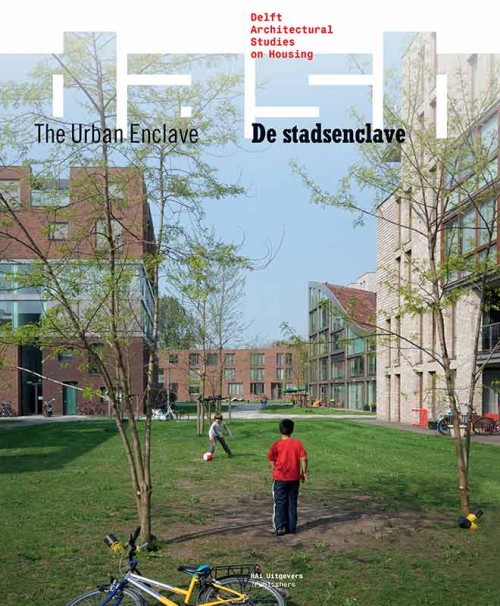
DASH 5 – The Urban Enclave is the product of an investigation into large-scale housing projects in the inner city, both historical and contemporary. Essays by Dirk van
den Heuvel and Lara Schrijver examine divergent ideas related to large scales and the city, based on the work of Piet Blom and Oswald Matthias Ungers, respectively.
Dick van Gameren and Pierijn van der Putt look into the underlying typologies of the urban enclave. Elain Harwood analyses the evolution of the notorious Barbican in London, and Christopher Woodward charts the creation, in the same city 200 years previously, of the Adelphi, often cited as the inspiration for the Barbican. In an interview, architect and urban designer Rob Krier expounds on the historical models he uses for his urban renewal projects. The planning documentation contains a selection of urban enclaves old and new, extensively analysed and documented with drawings and photographs.
CONTENT
Read more →
Essays
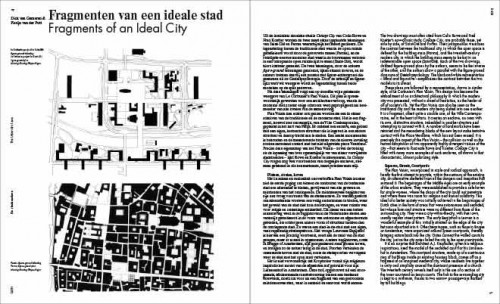
This article explore the typologies that have served as the basis for the creation of urban enclaves over the years. The authors argue that a collage of miniature utopias might be a suitable model for the contemporary city.
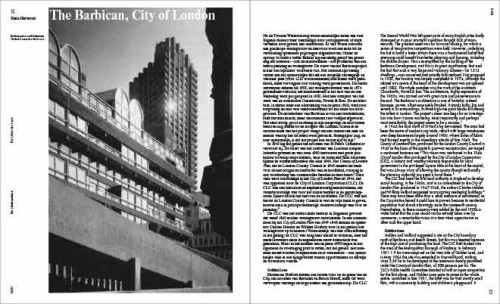
A detailed account of how the Barbican, one of the largest housing enclaves in London, came into being. How architectural viewpoints, engineering challenges, power structures, political considerations and pure chance resulted in an extraordinary project.
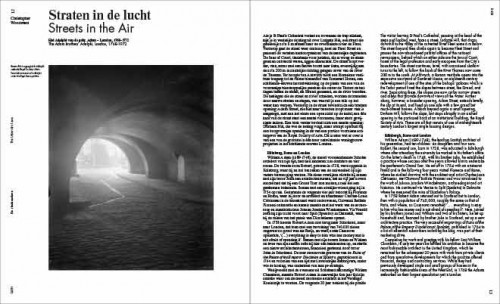
History of the conception, construction and virtually total demolition of the Adelphi, on the banks of the Thames. The daring venture, with its wharf cellars and exceptionally high housing density, epresented a typological revolution in eighteenth-century London. But the project nearly ruined its architects.
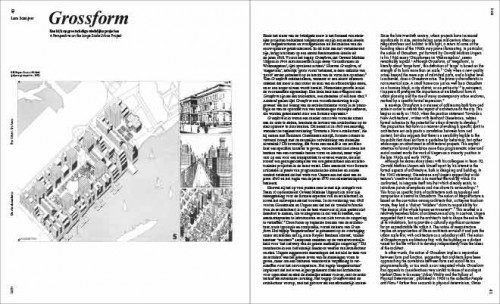
In the 1960s and ’70s, O.M. Ungers re-examined the relationship between architecture and the city. With the Grossform concept he emphasized the importance of formal articulation rather than programmatic intentions and social context.
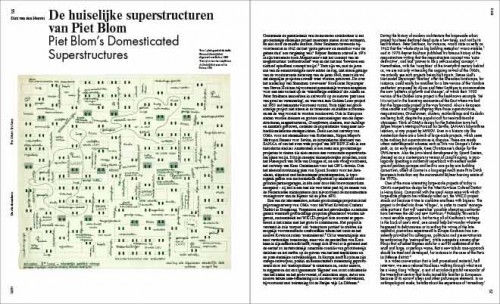
Through an analysis of three ‘moments of confrontation’, this article reveals the complex relationship between architect Piet Blom and the Team 10 architects collective. Both were investigating the potential of megastructures and other urban design typologies, in Blom’s case culminating in his design for the Oude Haven district in Rotterdam.
Plan Documentation
In the plan documentation for this fifth edition of DASH, ten urban enclaves have been mapped and illustrated using new analytic drawings and photo reportages specially commissioned for this study. These ten projects, spanning some 800 years, show how new residential areas have been designed and created within existing towns and cities. Together they reveal […]
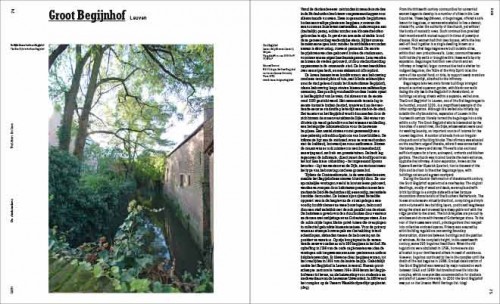
From the thirteenth century communities for unmarried women began to develop in a number of cities in the Low Countries. These begijnhoven, or beguinages, offered a safe haven for beguines, or women who wished to live a devout, chaste life, under the authority of the church, yet without the bonds of monastic vows. Such communities […]
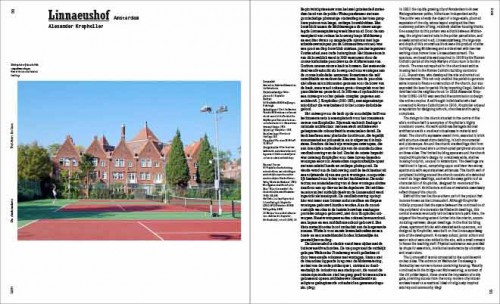
In 1921 the rapidly growing city of Amsterdam took over Watergraafsmeer polder, hitherto an independent entity. The polder was already the object of a large-scale, planned expansion of the city, whose layout employed the then customary pattern of long, relatively shallow housing blocks. One exception to this pattern was a block between Middenweg, the original […]
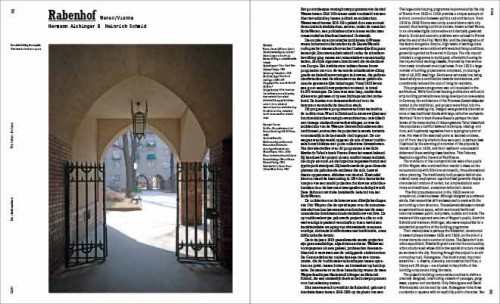
The large-scale housing programme implemented by the city of Vienna from 1923 to 1934 provides a unique example of a direct connection between politics and architecture. From 1919 to 1934 Vienna was run by a social-democratic city council, thus forming a political enclave, known as Red Vienna, in an otherwise highly conservative and clerically governed […]
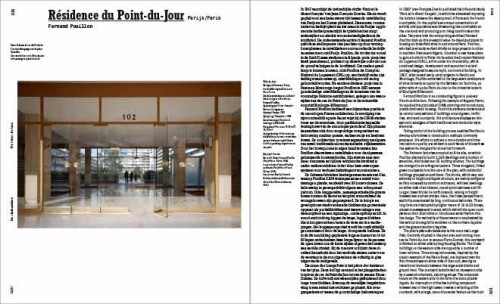
In 1947 Jean-François Gravier published his influential study ‘Paris et le désert français’, in which he advocated improving the balance between the development of Paris and the French countryside, for the capital’s enormous concentration of activity and population was threatening the countryside on the one hand and producing poor living conditions on the other. Ten […]
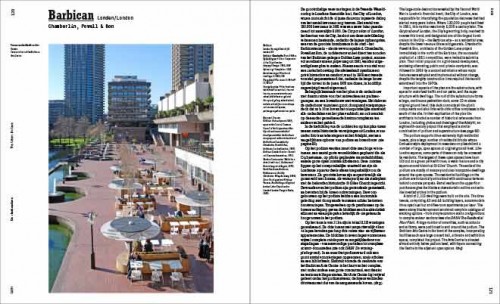
The large-scale destruction wreaked by the Second World War in London’s financial heart, the City of London, was responsible for intensifying the population decrease that had started many years before. Where 120,000 people had lived in 1851, this number was barely 5,000 a century later. The Corporation of London, the City’s governing body, resolved to […]
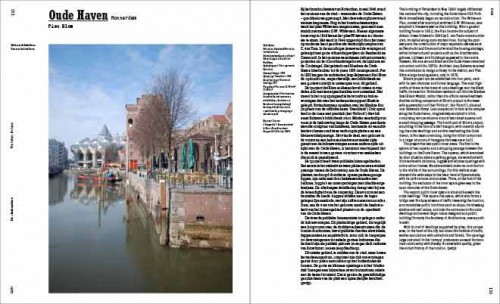
The bombing of Rotterdam in May 1940 largely obliterated the centre of the city, including the Oude Haven (Old Port). Work immediately began on reconstruction. The Witteveen Plan, named after municipal architect G.W. Witteveen, was adopted in the same year as the bombing. After a general building freeze in 1942, the Plan became the subject […]
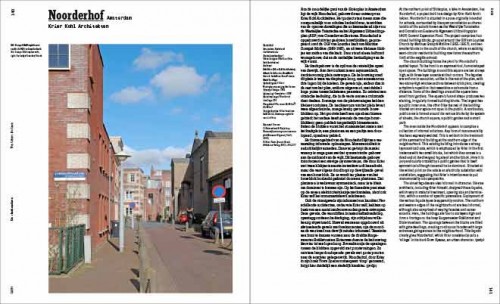
At the northern point of Sloterplas, a lake in Amsterdam, lies Noorderhof, a project built to a design by Krier Kohl Architekten. Noorderhof is situated in a zone originally intended for schools, surrounded by the open parcellation so characteristic of the suburb known as the Westelijke Tuinsteden and Cornelis van Eesteren’s Algemeen Uitbreidingsplan (AUP, General […]
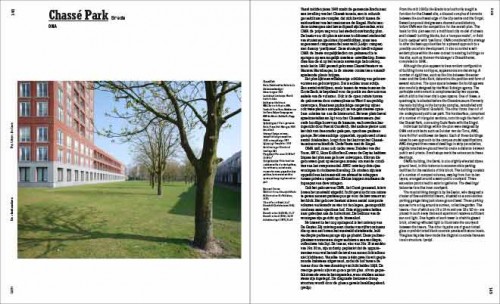
From the mid 1990s the Breda local authority sought a function for the Chassé site, a disused complex of barracks between the southeast edge of the city centre and the Singel. Several proposed designs were deemed unsatisfactory, before OMA won the competition for the overall plan. The basis for this plan was not a traditional […]
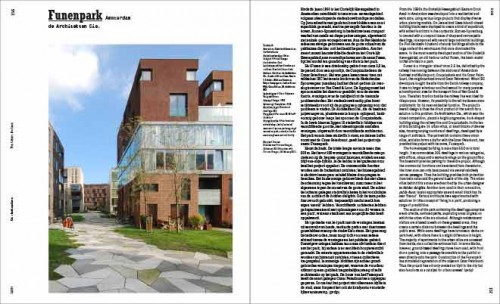
From the 1990s the Oostelijk Havengebied (Eastern Dock Area) in Amsterdam was developed into a residential and work zone, using various large projects that display diverse urban planning models. On Java-eiland (Java Island) closed building blocks were deployed to create a kind of super-block, with added functions in the courtyards. Borneo-Sporenburg is covered with a […]