
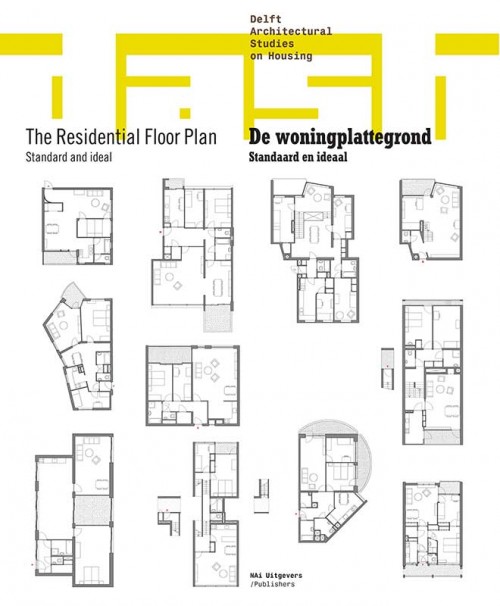
The concepts ‘standard’ and ‘ideal’ are inextricably associated in housing design. Efforts by various architects in the twentieth century to create standardized and affordable dwellings produced an endlessly varied series of ideal homes, some of which were built, others not. While large-scale housing is based to a high degree on optimization and repetition, residential floor […]
DASH #04 – The Residential Floor Plan
Standard and Ideal
Although mass customization has for some time been the magic charm for banishing the spectre of twentiethcentury mass production, ‘standard’ solutions still prove the rule in everyday building practice. Strict regulations, a conservative construction industry and limited budgets have forced architects to obtain ideal designs by making the most of existing resources.
The Residential Floor Plan, Standard and Ideal, the theme of DASH 4 (Delft Architectural Studies on Housing), addresses this dilemma facing architects of housing. It considers two approaches: on the one hand, the search for new typologies, familiar from modern architecture and the welfare state, and on the other typological invention, which takes existing house-building conventions as its starting point.
Essays by Dirk van den Heuvel, Dorine van Hoogstraten and Bart Goldhoorn examine the scenographing of differences through typological recombinations in Dutch architecture in the late twentieth century, Habraken’s advocacy, in the 1960s, of viewing support and infill independently of each other, and the phenomenon of totally standardized, Soviet Russian mass housing, which offers points of departure for a reconsideration of standardization in a climate of free-market thinking. Interviews with Frits van Dongen and Edwin Oostmeijer
provide insights into the issue of standardization from the perspective of architect and developer respectively.
The plan documentation comprises a series of classic and lesser-known projects from inside and outside the Netherlands, by architects such as Diener & Diener, Frits van Dongen, Dick Apon, Kenneth Frampton, Hans Scharoun, Van den Broek & Bakema, Willem van Tijen, Erik Sigfrid Persson and Adolf Rading.
CONTENT
Read more →
Essays
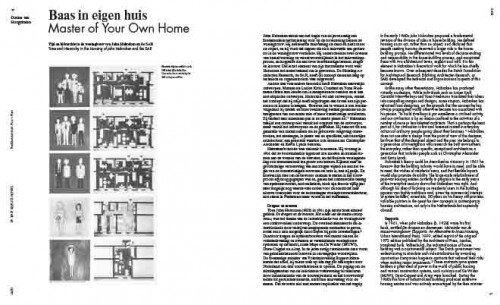
Time and Hierarchy in the Housing of John Habraken and the SAR
An evaluation and actualization of the ideas of John Habraken and his historic endeavour to accord residents a central role in the housing process, in order to satisfy constantly changing accommodation requirements.
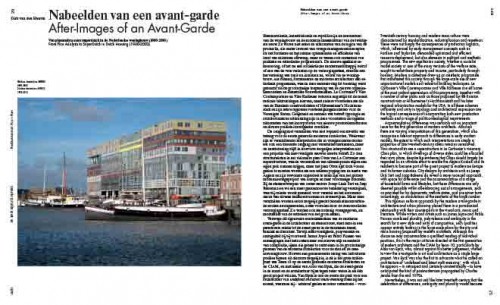
From Plan Analysis to SuperDutch in Dutch Housing (1980-2003)
An extensive reconstruction of how thinking about differences was adopted in Dutch house-building practice in the early 1990s, ultimately culminating in an unprecedentedly successful period, better known as SuperDutch.
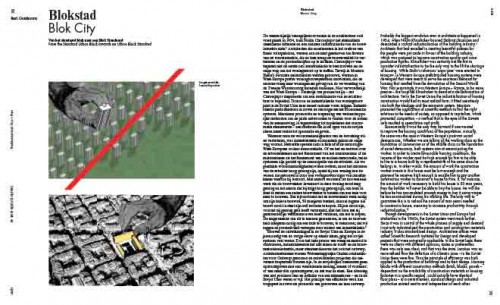
From the standard urban block towards an Urban Block Standard
A speculative investigation of new possibilities arising from the brutal confrontation between totally standardized Soviet mass housing and the custom design of free-market thinking.
Interviews
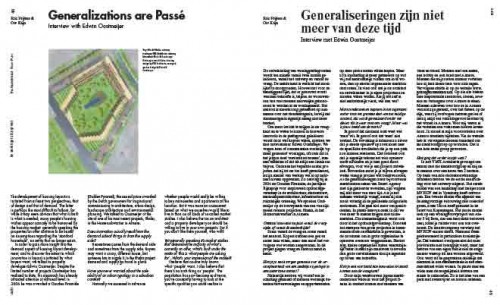
Interview with Edwin Oostmeijer
A conversation with architect Frits van Dongen, who remarks that typological innovation is both the consequence of a meticulous process of rationalization and optimization and the product of endlessly soldiering on, constantly building on what has gone before.
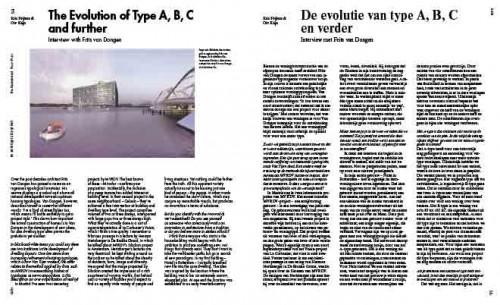
Interview with Frits van Dongen
Over the past decades architect Frits van Dongen has gained a name as an ingenious typological innovator. His oeuvre displays a gradual and above all rational development towards optimum housing typologies. Van Dongen, however, describes himself in somewhat different words: ‘I’m a kind of street fighter too, which means I’ll battle endlessly to get a […]
Plan Documentation
The Floor Plan between Standard and Ideal The design of models for large-scale housing developments has been the greatest architectural challenge of the past 100 years. The search for a high-quality, affordable home has resulted in an almost infinite series of studies, designs and realized projects. For DASH 04 we have selected a series of projects […]
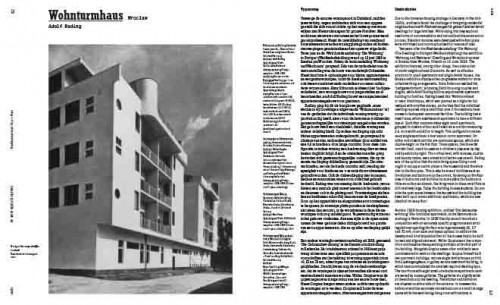
Standardization Due to the immense housing shortage in Germany in the mid-1920s, architects faced the challenge of designing residential neighbourhoods with Kleinwohnungen für grosse Familien (small dwellings for large families). While doing this they explored new forms of accommodation and rationalized the -construction process. Standard modules were developed while floor plans were minimized and reconceptualized […]
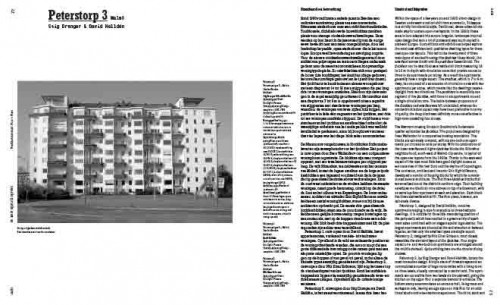
Standard and Adaptation Within the space of a few years around 1930 urban design in Sweden underwent a radical shift from a romantic, Sittesque to a strictly functionalist style. Traditional, dense urban blocks made way for austere open-row layouts. In the 1940s these were in turn adapted into a more irregular, landscape-inspired open design that […]
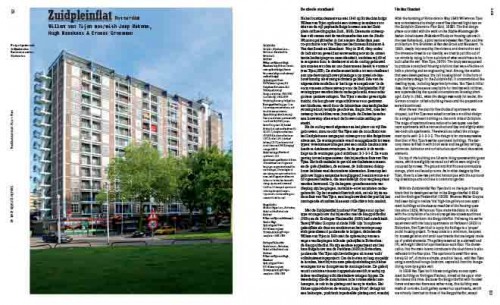
The Ideal Standard After the bombing of Rotterdam in May 1940 Willem van Tijen was commissioned to design one of five planned high-rises on the Zuidplein (Extension Plan Zuid, 1938). The first design phase coincided with the work on the Studie Woonmogelijkheden in het nieuwe Rotterdam (Study on housing options in the new Rotterdam), a […]
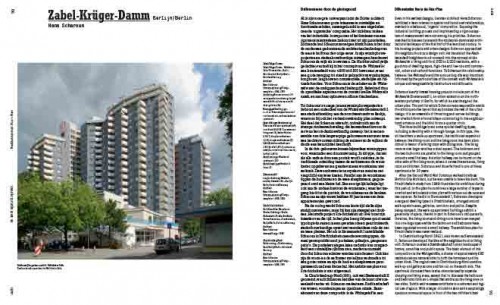
Differentiation Due to the Floor Plan Even in his earliest designs, German architect Hans Scharoun exhibited a keen interest in spatial and functional relationships, married in a balanced, ‘organic’ composition. Exposing the industrial building process and implementing a rigorous system of measurement were not among his priorities. Scharoun marched to his own tune amid the […]
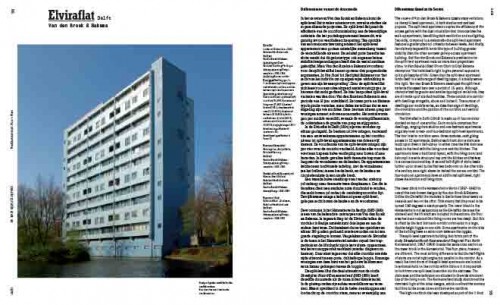
Differentiatons Based on the Section The oeuvre of Van den Broek & Bakema boasts many variations on the split-level apartment, in both studies and realized projects. The split-level apartment couples the efficiency of the access gallery with the dual orientation that characterizes the walk-up apartment, benefitting both ventilation and sunlighting. Secondly, compared to a maisonette […]
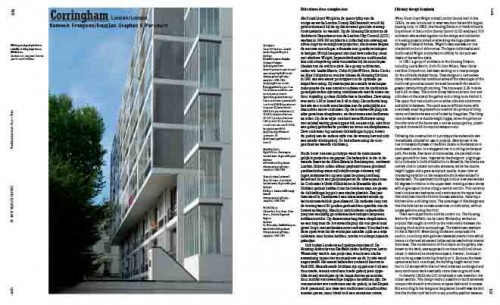
Efficiency through Complexity When Frank Lloyd Wright visited London County Hall in the 1950s, he was introduced to what was then the world’s largest housing body. In 1956, the Housing Division of the Architect’s Department of the London County Council (LCC) employed 310 architects who worked together on the design and realization of housing projects […]
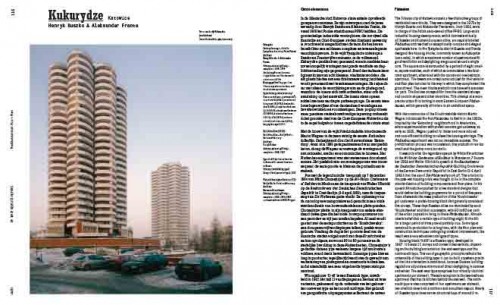
Plattenbau The Silesian city of Katowice boasts a few distinctive groups of residential tower blocks. They were designed in the 1970s by Henryk Buszko and Aleksander Franta who, from 1956, were in charge of the Polish state-owned office PPBO. Large-scale industrial housing developments, which dominate virtually all Russian and Eastern European cities, are usually labelled […]
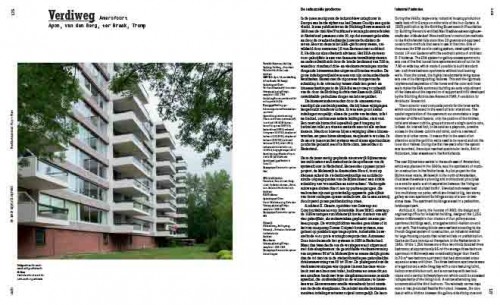
Industrial Production During the 1960s, large-scale, industrial housing production really took off in Europe on either side of the Iron Curtain. A 1968 publication by the Stichting Bouwresearch (Foundation for Building Research) entitled Niet Traditionele woningbouwmethoden in Nederland (Non-traditional construction methods in the Netherlands) lists more than 30 government-approved construction methods that were in use […]
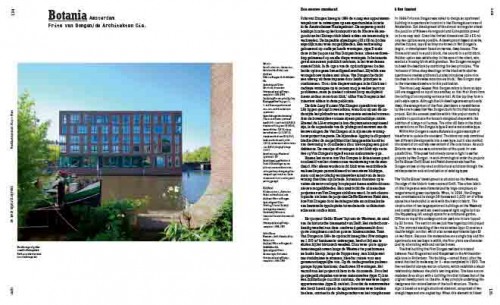
A New Standard In 1996 Frits van Dongen was asked to design an apartment building in a spectacular location in the Plantagebuurt area of Amsterdam. But development of the almost rectangular site at the junction of Nieuwe Herengracht and Entrepotdok proved to be no easy task. Given the limited dimensions (33 x 55 m) only […]
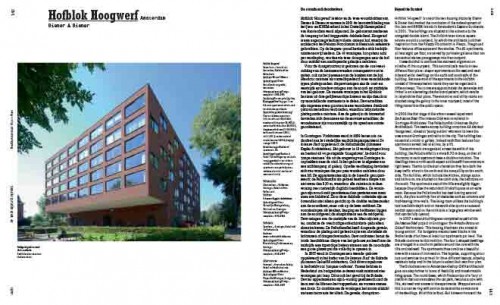
Beyond the Standard Hofblok ‘Hoogwerf’ is one of the two housing blocks by Diener & Diener that marked the conclusion of the redevelopment of the Java and KNSM islands in Amsterdam’s Eastern Docklands in 2001. The buildings are situated at the entrance to the -elongated double island. The Hofblok is an almost square volume around […]