
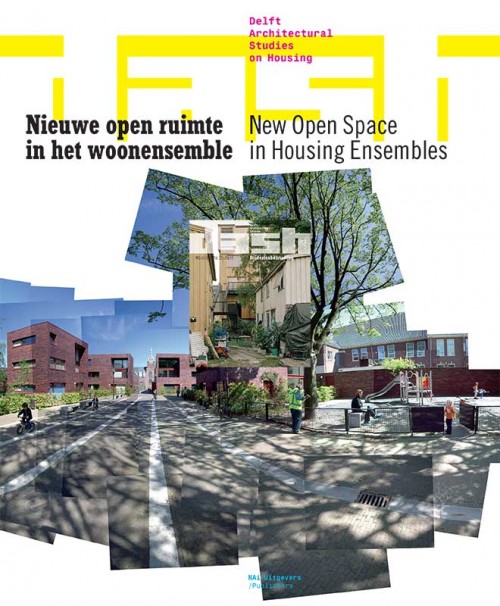
New Open Space for Living This inaugural issue of DASH is dedicated to a relatively new phenomenon in the Netherlands: the introduction of public space inside the housing block. In itself, the combination of housing and public or collective space has a long history. The Dutch almshouses of the 17th and 18th centuries are a […]
DASH #01 – New Open Space in the Housing Ensemble
DASH (Delft Architectural Studies on Housing) is a new Journal devoted to residential design. Besides the Dutch housing tradition and present-day practice the journal addresses international developments. The first issue is about semi-public space around residential buildings, which is publicly accessible in principle, while at the same time it has a more private character because of its situation, design and articulation. Five essays place this development in a historical context and analyse the characteristics of the new open space in relation to public, collective and private domains. the modern-day function of such space and where its roots actually lie are investigated in interviews with Sjoerd Soeters and TonSchaap. The projects discussed, along with several noteworthy examples from the past, are documented in the form of photographic reportages and renderings of the plans and sectional views.
CONTENT
Read more →
Essays
In the past few years, a new generation of housing ensembles has emerged. Despite great differences in appearance, these new complexes have one important characteristic in common: the ‘new open space’ within them that is created by the arrangement of the buildings and which gives the ensemble its architectural identity – as, for example, the […]
The Convergence of Rich and Poor in Urban Treasures
This essay gives a brief overview of the typology of the Dutch almshouse while discussing the issue of representation by way of four examples from Haarlem.
The Architecture of the New Residential Court
The architectural qualities of the new open space are analysed by looking into the typologies of the Dutch perimeter block and the French court house.
Close reading of the designs of the new open space as a differentiation of the public space. Key characteristics such as the interrelations between the individual houses at ground floor level and adjacent public spaces are mapped.
Interviews
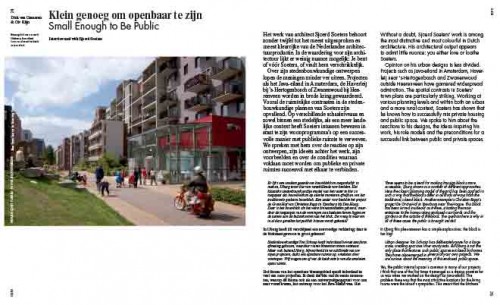
Interview with Sjoerd Soeters
Architect Sjoerd Soeters discusses issues typical of the series of housing ensembles characterized by the new open space, including the history of the projects and the question of whether the new open space was an explicit part of the assignment.
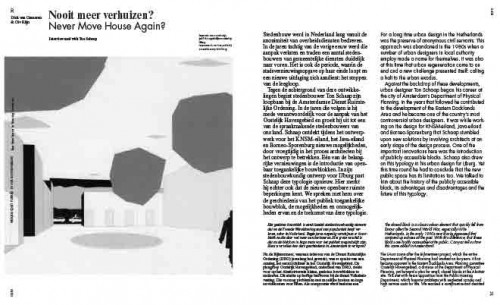
Interview with Ton Schaap
Urban designer Ton Schaap discusses issues typical of the series of housing ensembles characterized by the new open space, including the history of the projects and the question of whether the new open space was an explicit part of the assignment.
Plan Documenation
The plan documentation for the new open space in the housing ensemble comprises a set of recent projects and some historical reference points. The documentation sets out to facilitate a comparative analysis of the various projects. For this purpose the projects have all been newly drawn and photographed, using both documentation supplied by the architecture […]
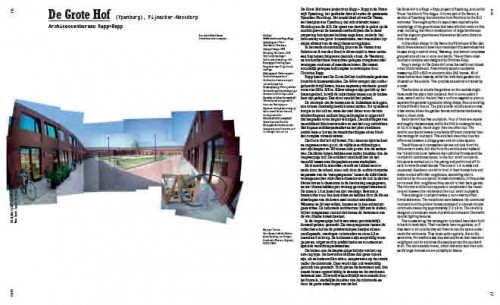
De Grote Hof is a Rapp + Rapp project in Ypenburg, a so-called ‘Vinex’ location in The Hague. It forms part of De Venen, a section of Ypenburg that stretches from Nootdorp to the A12 motorway. The neighbourhood’s layout was inspired by the morphology of the greenhouses that have left their mark on this area, […]
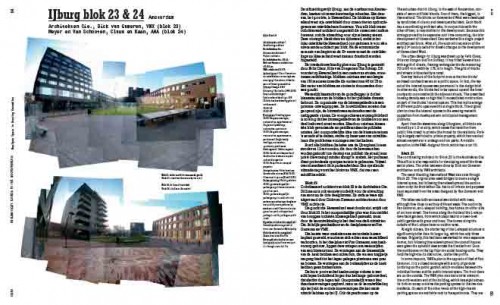
The suburban district IJburg, to the east of Amsterdam, con sists of seven artificial islands. One of them, the biggest, is Haveneiland. The blocks on Haveneiland West were developed by syndicates of clients and developers/builders. Each block has a coordinating architect who, in conjunction with the other offices, is responsible for the development. Because this […]
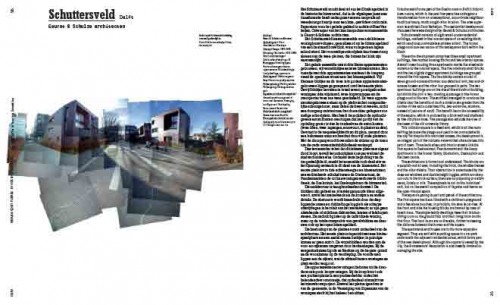
Schuttersveld forms part of the Doelen area in Delft’s historic town centre, which in the past few years has undergone a transformation from an unexceptional, second-rate neighbour hood to a luxury, much sought-after location. The area super visor is architect Fons Verheijen. The residential development discussed here was designed by Geurst & Schulze architecten. Schuttersveld […]
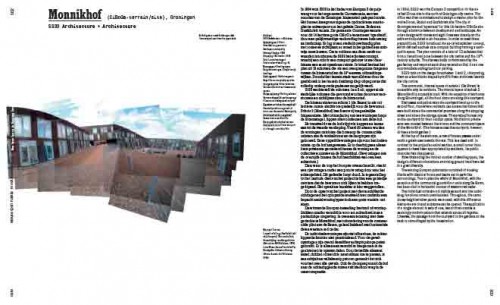
In 1994, S333 won the Europan 3 competition for the so-called Circus site to the north of Groningen city centre. The office was then commissioned to design a master plan for the entire Circus, Boden and Gasfabriek site. The city of Groningen wanted ‘openness’ for this 14-hectare CiBoGa site through a balance between development and […]
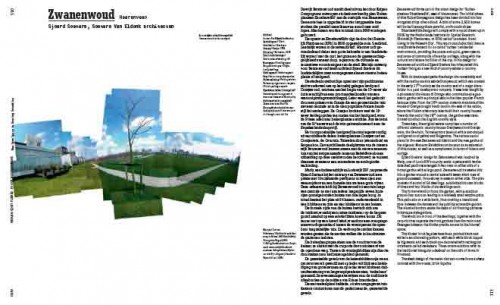
Zwanenwoud forms part of the urban design for ‘Buiten plaatsen Skoatterwâld’, east of Heerenveen. The initial phase of this KuiperCompagnons design has been divided into four elongated strips of woodland. A total of some 2,500 homes will be built among these parallel, north-south strips. Skoatterwâld’s design will comply with a report drawn up in 2005 […]
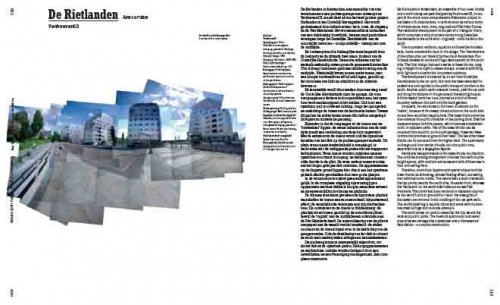
De Rietlanden in Amsterdam, an ensemble of four tower blocks and a multi-storey car park designed by VenhoevenCS, forms part of the much more comprehensive Rietlanden project in the Eastern Docklands Area. It is dominated by various forms of infrastructure: train, tram, ring road and Piet Hein Tunnel. The residential development forms part of a […]
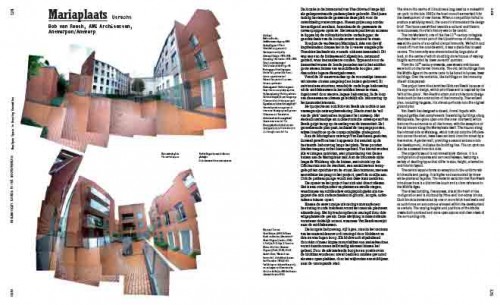
The site in the centre of Utrecht was long used as a makeshift car park. In the late 1980s the local council earmarked it for the development of new homes. When a competition failed to produce a satisfying result, the council reformulated the design brief. The focus now shifted towards a cultural and historic consciousness; […]
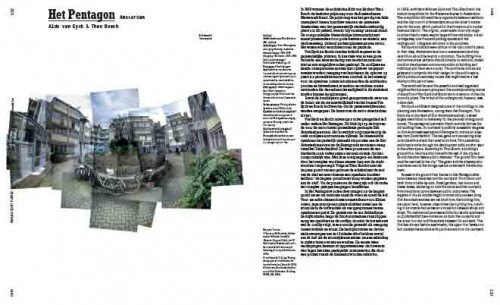
In 1969, architects Aldo van Eyck and Theo Bosch won the invited competition for the Nieuwmarkt area in Amsterdam. The competition followed fierce arguments between residents and the city council of Amsterdam about the latter’s master plan for the area, which pushed for the formation of a central business district. The original, small-scale inner-city neighbourhood […]
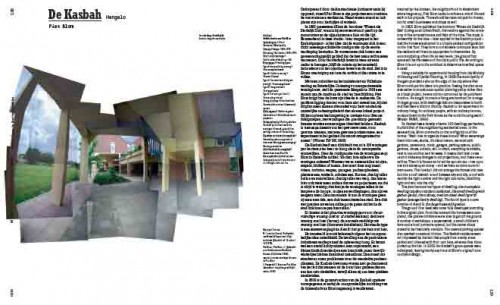
Inspired by the Jordaan, the neighbourhood in Amsterdam where he grew up, Piet Blom seeks to achieve a mix of life and work in his projects. There should be room not just for homes, but for small businesses and shops as well. In 1965 Blom published the brochure ‘Wonen als Stedelijk Dak’ (Living as an […]
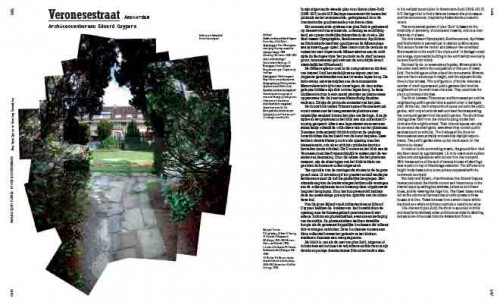
In his realized second plan for Amsterdam-Zuid (1905-1917), H.P. Berlage tried to find a balance between the picturesque and the monumental, inspired by Amsterdam’s concentric canals. The monumental system of plan ‘Zuid’ is based on the simplicity of symmetry, structure and linearity, and on a clear hierarchy of streets. The area between Olympiaplein, Beethovenstraat, Apollo […]
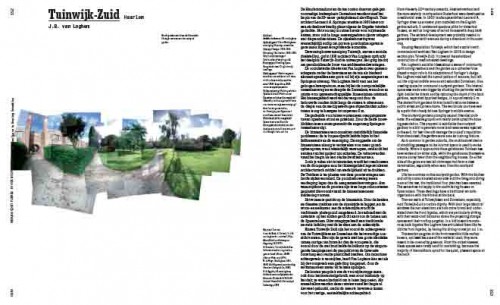
From the early 20th century onwards, Haarlemmerhout and the more easterly country estate Oosterhout were developed as a residential area. In 1900 landscape architect Leonard A. Springer drew up a master plan modelled on the English garden suburb. It envisioned spacious plots for detached houses, as well as long rows of seried houses with deep […]